



今日上海
虹桥:从机场到商业区 - 2026年11月03日
Hongqiao: from airfield to business district
Long before Hongqiao became one of Shanghai's major transport hubs, a house known as The Limit stood at the city's southwestern boundary. Completed in 1924, it was home to British businessman William James Hawkings and his family.
Nearly a century later, the house remains part of Shanghai's changing landscape. Carefully restored, it now sits within a heritage compound known as No. 1 Hongqiao Origin, surrounded by a transport hub that has grown to encompass the airport, high-speed rail, Metro lines and major road networks.
The surrounding Hongqiao International Central Business District covers about 151 square kilometers. It spans parts of Minhang, Changning, Qingpu and Jiading in western Shanghai.
The district hosts the China International Import Expo and corporate headquarters. It is also developing services to help Chinese companies expand abroad.
Around it, a shopping district has developed to serve office workers, exhibition visitors, travelers and nearby residents.
First, there was a bridge
Hongqiao means Rainbow Bridge. The name comes from a wooden bridge over the Puhuitang waterway in what is now Minhang's Hongqiao Town.
A market developed along the waterway during the Ming Dynasty (1368-1644). The bridge is named after rainbows seen after summer rain.
The waterways connected the town to markets for agricultural produce and household goods. In the 1980s, the Hongqiao Township was still a vegetable-growing base supplying Shanghai.
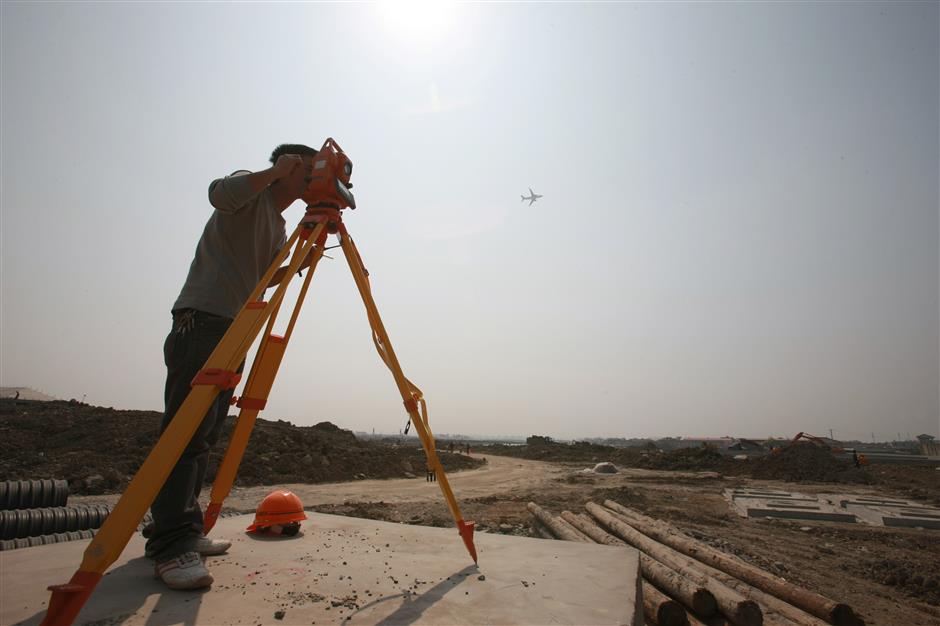
The airport began in 1921 with a dirt runway. Nearby, the Hawkings family and their relatives built two houses, both completed in 1924.
Edward Selby Little, Hawkings' father-in-law, had a house with a Chinese-style roof and upturned corners. The Hawkings home, The Limit, had less ornamentation.
A team led by Tongji University professor Hua Xiahong contacted the family's descendants. They shared photographs and written records, including images of the houses under construction. The material helped establish the buildings' dates and ownership and guided their restoration.
The airport also became a setting for diplomacy. On February 28, 1972, US President Richard Nixon departed from Hongqiao after his China visit. Premier Zhou Enlai saw him off. The visit had produced the Shanghai Communique.
The business district that needed a bus
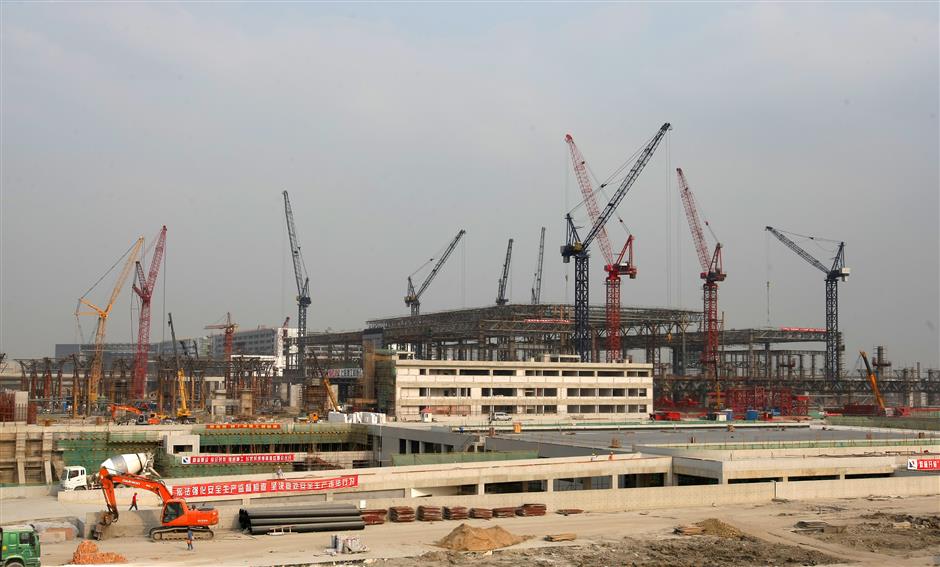
Construction of the Hongqiao Economic and Technological Development Zone began in 1983. It received national-level approval in 1986.
The zone occupied less than a square kilometer in Changning, east of today's transport hub. It focused on exhibitions, offices, hotels and international trade.
Li Renjie, Changning's former district Party secretary, described its early difficulties in a published oral history.
To bring activity to the zone, the city's foreign economic and trade commission moved there from the Bund. Staff considered Hongqiao far away and difficult to reach. The zone provided daily commuter buses.
Housing was another need. In Li's account, people coming to work in the zone, particularly foreigners, lacked suitable accommodation.
Gubei New Area was then developed as a residential counterpart to the offices. Infrastructure was built during this period: roads, water mains, a sewage treatment plant, a substation and a telephone exchange.
Bringing rail and air together
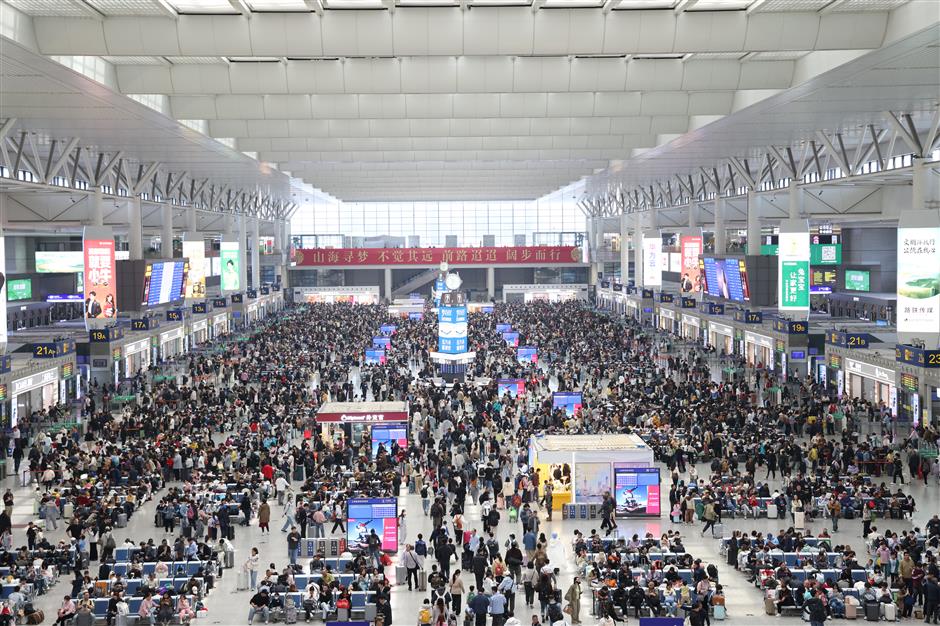
In 2004 and 2005, planners selected land west of the Hongqiao airport for the Shanghai terminus of the Beijing-Shanghai high-speed railway. The plan brought the airport and railway station together, with Metro and road connections.
Shanghai decided to develop Hongqiao Business District in July 2009. The airport's Terminal 2 opened on March 16, 2010. Hongqiao Railway Station followed on July 1, during Shanghai's World Expo 2010.
Rail services connected Hongqiao with cities including Nanjing and Hangzhou. Companies with offices near the hub could reach customers and suppliers across the Yangtze River Delta by train.
The delta spans Shanghai and the neighboring provinces of Jiangsu, Zhejiang and Anhui. Serving businesses across this region became part of Hongqiao's development plans.
The Airport Link Line opened in December 2024. It cut the rail journey between Hongqiao and Pudong airports to about 40 minutes. That is the station-to-station journey, excluding walking and airport procedures.
Four leaves
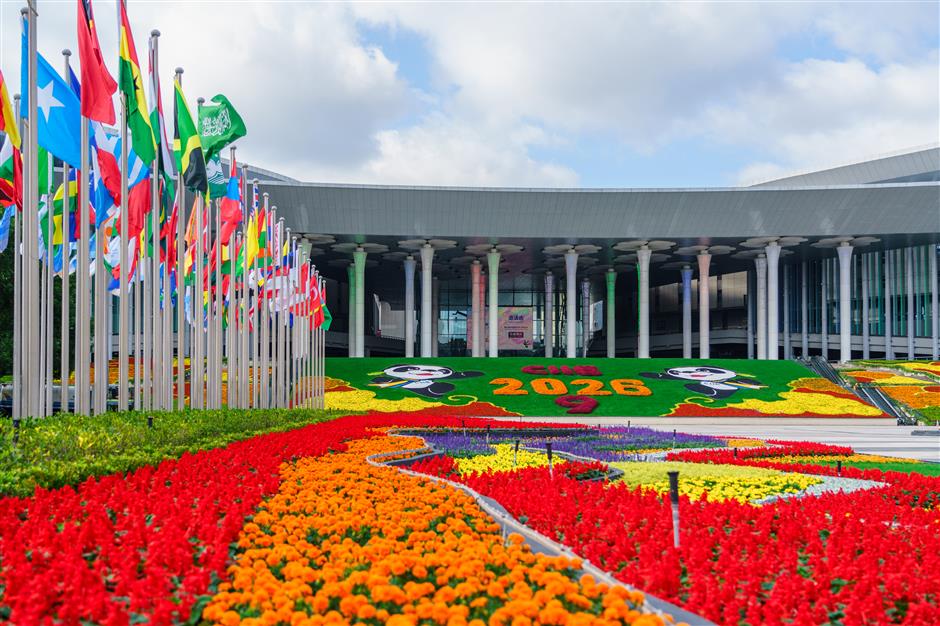
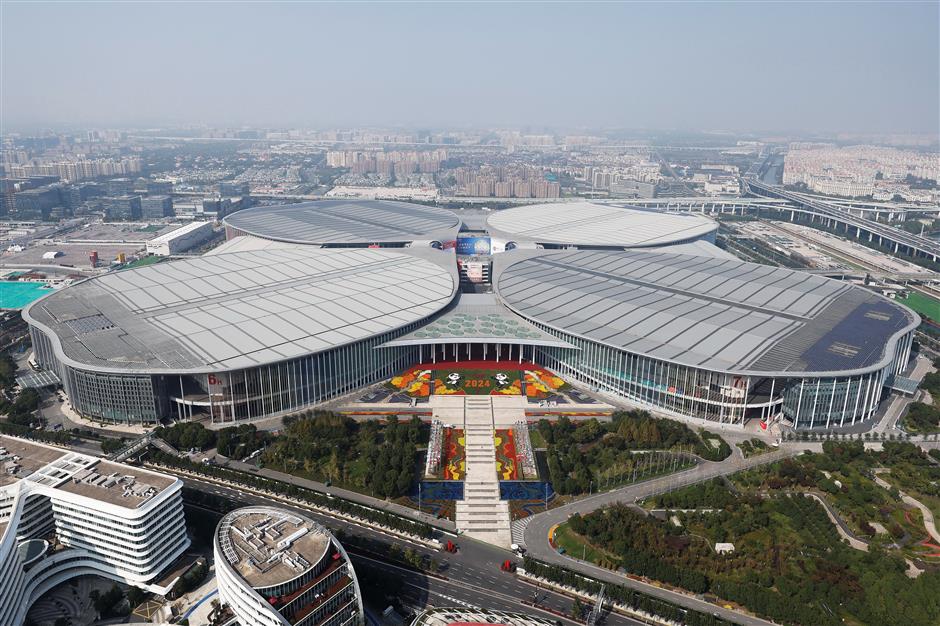
The National Exhibition and Convention Center (Shanghai), located west of the transport hub, features a four-leaf clover design.
It held its first China International Import Expo (CIIE) in 2018. The annual Shanghai expo showcases foreign suppliers' goods to Chinese buyers.
Hongqiao also aimed to facilitate trade between exhibitions. Shanghai sought year-round display and trading facilities for imported goods. Additionally, there was an effort to attract headquarters and providers of legal, accounting, and other business services.
In February 2021, the State Council approved the Hongqiao International Opening-up Hub plan. The business district became its core, with a role in connecting international trade and services with the delta's economy.
The shops between the station and the exhibition center were intended to serve several groups: people working in nearby offices, visitors attending trade fairs, passengers changing trains and residents of surrounding neighborhoods. That mix shaped the commercial developments that followed.
From lunch stops to shopping trips
THE HUB, also known as Hongqiao Xintiandi, opened in 2015. The complex includes a shopping mall, open-air commercial streets, offices, a hotel and a performance venue.
Longfor Hongqiao Paradise Walk opened in December 2016, between the transport hub and the exhibition center. Alongside shops and restaurants, it included a cinema, a supermarket and children's play facilities. These provided options beyond just dining during the workday.
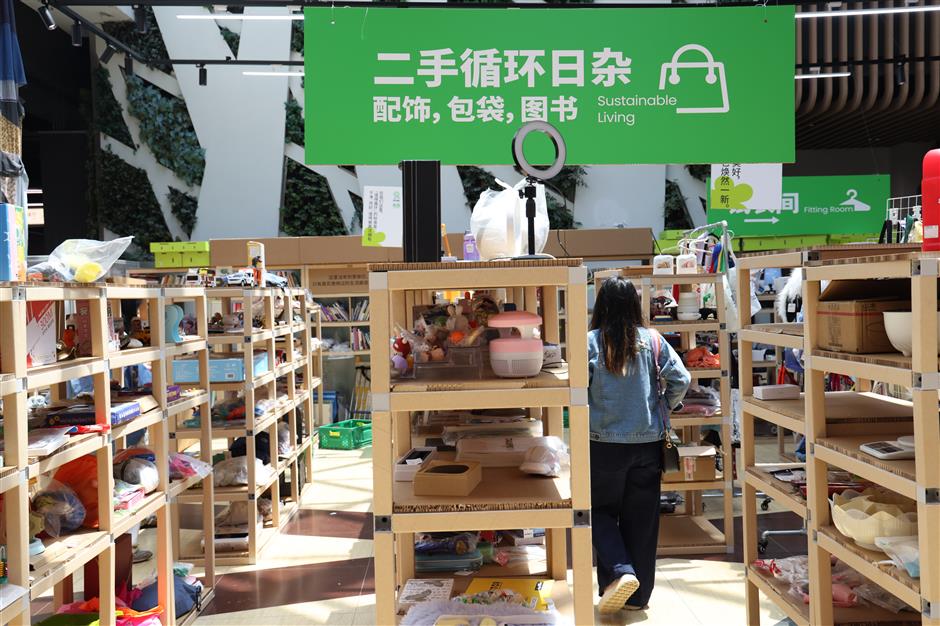
The retail mix continued to change. In December 2022, secondhand retailer ZZER opened a warehouse-style store in HUBO, the underground commercial area near Hongqiao Railway Station.
Bags, clothes and accessories were displayed on shelves. Customers could inspect them in person and scan codes for prices and information.
The shopping district now has Cishan, a climbing gym at Paradise Walk, which opened in 2026.
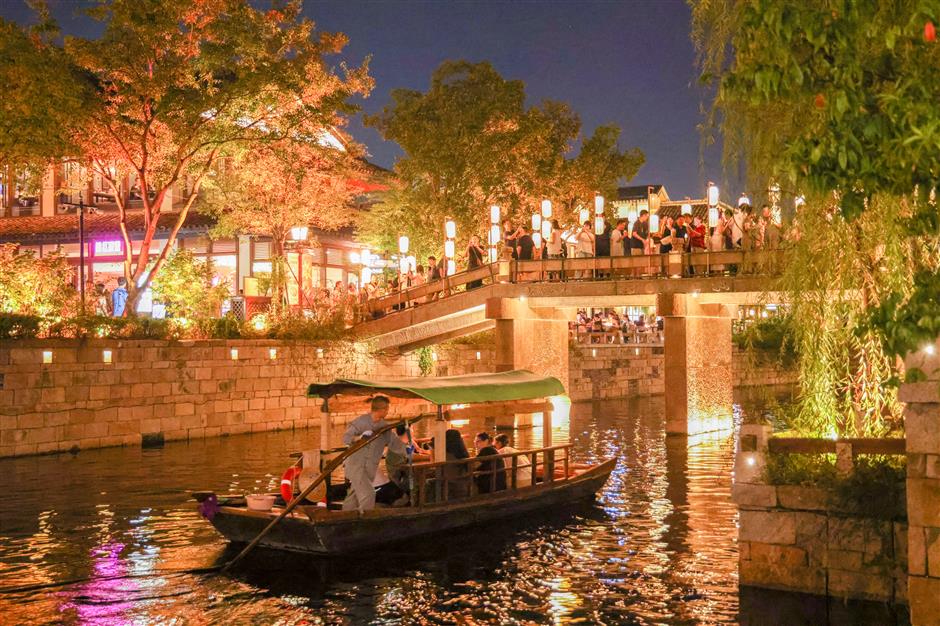
Panlong Xintiandi opened in Qingpu on April 29, 2023, combining shops and restaurants with restored buildings, waterways and public green space.
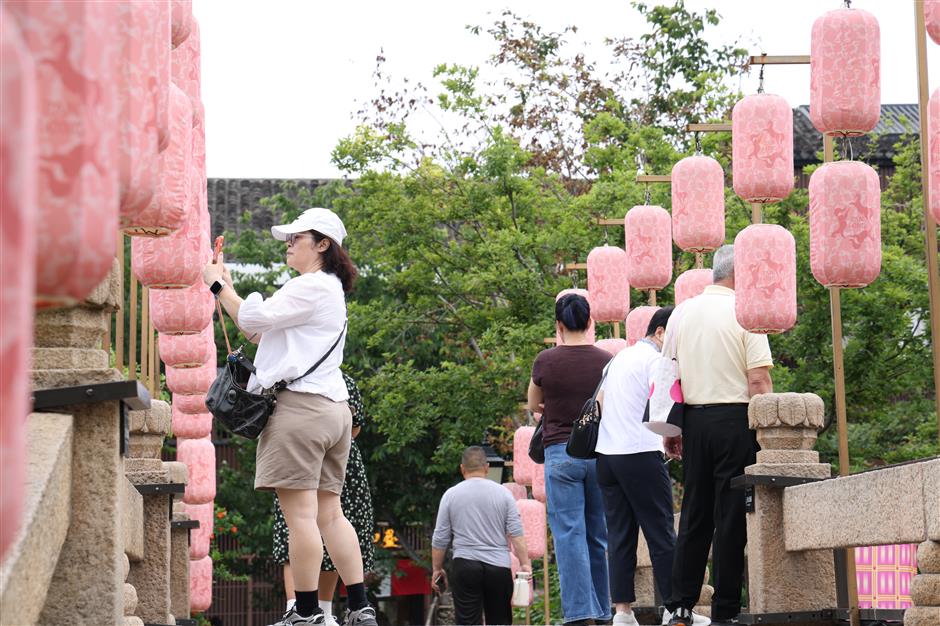
Here, commercial premises occupy parts of an older settlement. A former study hall became a teahouse. Another old residence became a Blue Bottle Coffee outlet. Bridges connect streets lined with shops, while paths continue into the surrounding green space.
Official figures put the number of city-recognized corporate headquarters in the Hongqiao CBD at 283 at the end of 2025. The 2026-30 plan aims to add about 125 more. The district's plans also include addressing housing, schools, medical services and local transport.
Proposals include more rental housing, pedestrian links, waterfront spaces and parks.
Source: City News Service
