



今日上海
上海首发经济正在改变我们的购物方式 - 2026年04月20日
SH's first-launch economy is changing how we shop
Shanghai has always had markets. Weekend fairs, craft carnivals, and food pop-ups sprawling across whatever plaza or heritage lane happened to be available that month. For a while, the formula was simple: gather a few dozen vendors, string some lights, charge 20rmb at the gate, call it a "lifestyle festival." You know how this goes.
What's changed, and changed fast, is the specificity over recent years. The markets filling up Shanghai's commercial districts these days aren't selling everything to everyone. They're selling one thing, obsessively, to exactly the right person. Burgers. Ciabatta. Strawberries. Craft beer. Bread, and then more bread, and then a different kind of bread from a city you've never been to. The niche is the point. The niche is, in fact, the engine.
The city government has a name for this: the "first-launch economy." It's a policy framework, a buzzword, and, if the foot traffic numbers are to be believed, a genuine phenomenon. The logic runs something like this: brands want to debut somewhere that signals ambition; Shanghai wants to be that somewhere; consumers, specifically younger ones, want access to things that are new, exclusive, and worth posting. Everyone wins, at least in theory, and the market format turns out to be the ideal testing ground for all of it.
Why markets? Why now? Why does every one of these things seem to be bigger than the last?
That's what we're here to figure out.
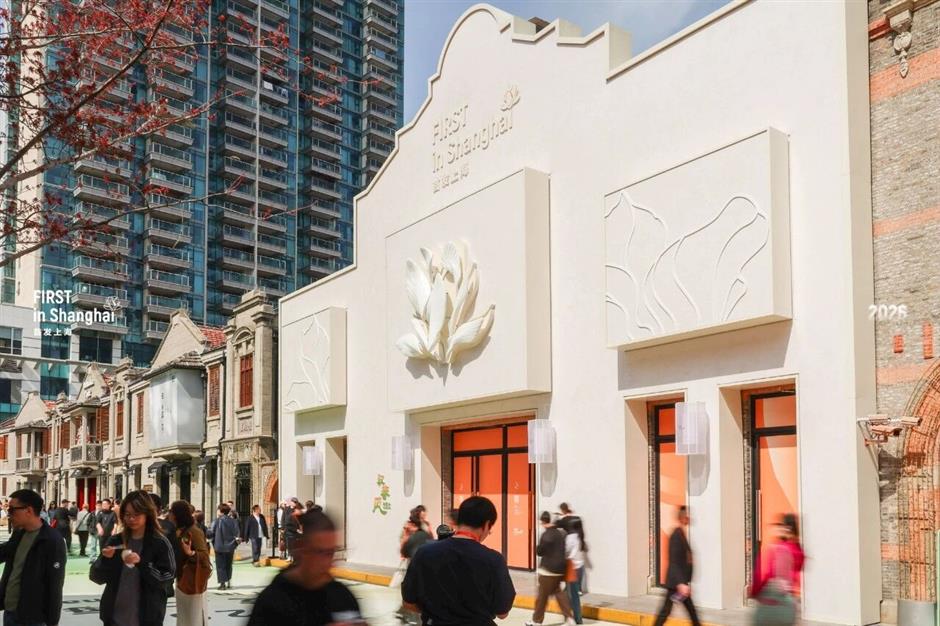
The First Launch Shanghai 4.0 event was held at Zhangyuan
From Mass Appeal to Niche Obsession: The Rise of First-Launch Consumption
The policy scaffolding behind all this is worth understanding, because it explains why Shanghai's market scene looks the way it does and not like, say, a farmer's market in Portland.
"First Launch Shanghai 4.0" is the latest iteration of a municipal initiative designed to make Shanghai the preferred city for brands debuting in China, or debuting at all. Thirteen support measures. Subsidies of up to 1 million yuan (US$146,600) for malls and commercial districts that successfully attract flagship and first stores. The city is, in other words, paying for the privilege of going first.
Markets fit neatly into this framework for reasons that are straightforward and a little unsexy: lower costs, faster approvals, and no long-term lease commitment. A brand that wants to test whether Shanghai consumers will pay 58rmb for a single loaf of sourdough from Chengdu doesn't need to sign a three-year contract in a Jing'an mall to find out. They need a booth, a weekend, and a decent-looking banner. The market does the rest.
But the policy context only explains the supply side. The demand side is something else: a consumer base, skewing young, that has apparently decided that "first" is itself a value. Not first as in early-adopter bragging rights, exactly, but first as in access, as in I was there, as in the thing I ate existed in Shanghai for exactly four days and I have the photos to prove it. Exclusivity at scale, which sounds like a contradiction but has become the defining logic of how these events are marketed and why they keep working.
Today's consumer landscape is becoming increasingly segmented. People are no longer satisfied with one-size-fits-all experiences – they want to dive deep into areas they genuinely care about.
At the same time, the concepts of "first launch" and "first exhibition" are being widely embraced. Whether it's bringing in top-tier resources from across the country or creating original IPs, exclusivity and novelty – core to the first-launch economy – have become key drivers encouraging repeat visits and social sharing.
Consider what happened at BFC's Weekend Market earlier this year. The Bund International Bread Festival: 220 brands, 45-plus cities, somewhere north of 5,000 types of bread. At peak hours, 160 vendors competing simultaneously for the attention of people who had, apparently, decided that a Saturday on the Bund was best spent eating their way through a carbohydrate atlas of China.
Fifty thousand pieces of bread sold in the first two hours. That's not a typo and it's not a rounding error. That's a number that makes you reconsider everything you thought you knew about Shanghai's appetite for sourdough from Wuhan.
Two-thirds of the brands came from outside Shanghai. Nearly a third were making their Shanghai debut, which is the whole point, the engine under the hood of all of this. The out-of-towners bring novelty; the debuts bring urgency; the urgency brings crowds; the crowds bring the kind of foot traffic that commercial districts spend entire marketing budgets trying to generate. A bread festival did it in a weekend.
The merchandise table did its part too. Bread-shaped keychains, fridge magnets, blind boxes, hair clips. None of this has anything to do with bread in any nutritional sense, but that's also not really the point. The point is that people wanted a souvenir from the experience, something to carry home and photograph, proof that they were there when the ciabatta from Chengdu came to Shanghai for the first and possibly only time.
Then The MIXC Shanghai ran the Super Bread Festival and made the Bund event look like a bake sale.
150 brands, 54 cities, four days, 800,000 pieces of bread sold. Stalls running nearly a kilometer end to end, which is a lot of bread even by Shanghai standards. Eighty percent of the brands were first-timers in the city. Total sales: 61.9 million yuan, up 55% on the previous year. Visitors: 540,000, up 113%.
But the number that actually matters, the one the mall operators frame and hang on the wall, is this: the wider Wuzhong Road commercial district recorded 76.7 million yuan in total sales and 697,300 visitors over the same four days. Up 33% and 54% respectively. The bread festival didn't just fill The MIXC. It filled the neighborhood.
This is the part of the equation that's easy to miss when you're standing in a queue for a focaccia from Chongqing. The market is not the destination. The market is the reason to come to the destination, and once you're there, you eat lunch somewhere, you browse a few stores, you get a coffee, you maybe come back the next day because your friend couldn't make it and you told her about the walnut loaf from Xi'an and now she needs to experience it herself. The bread is almost incidental. Almost.
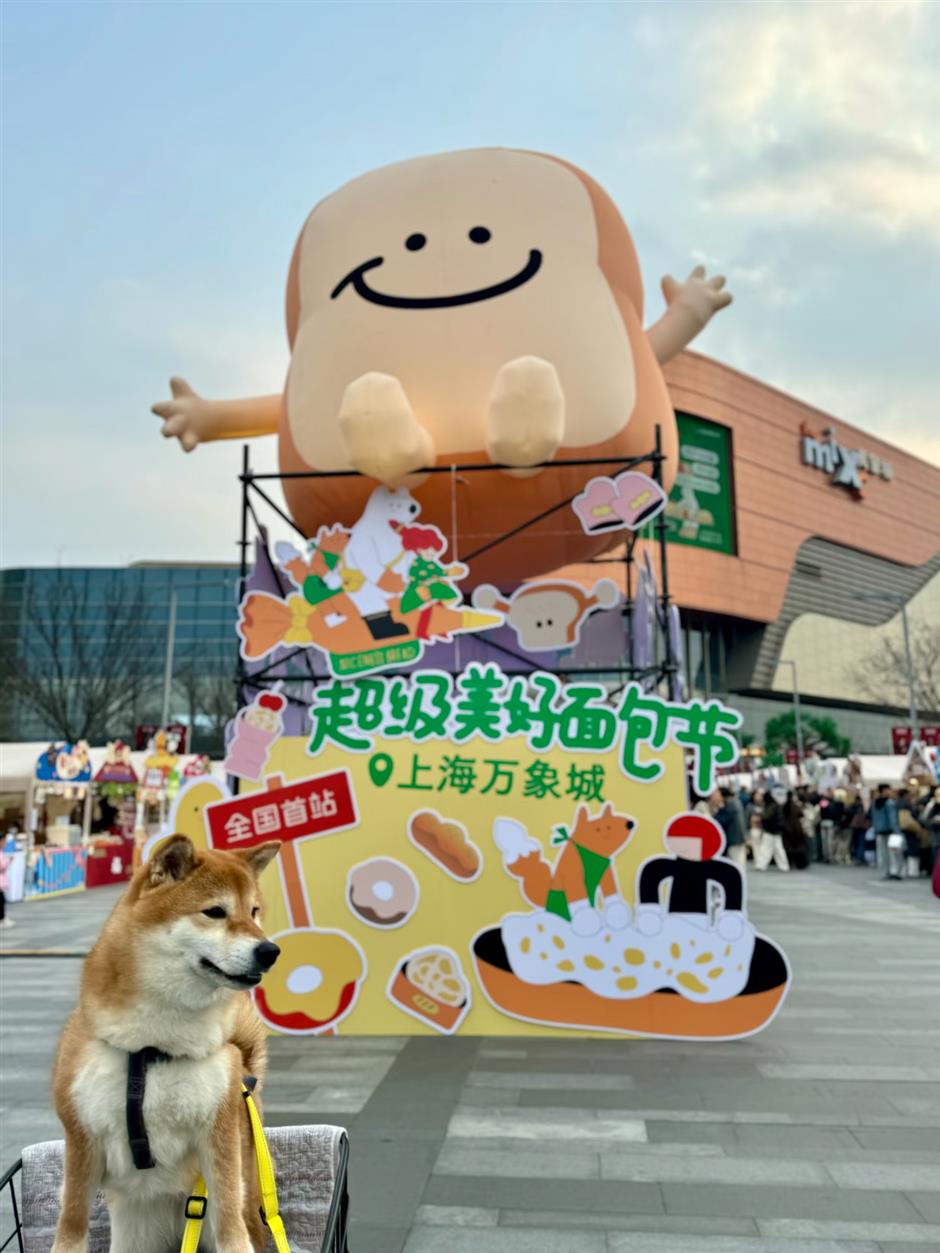
Super Bread Festival poster
Minhang got one too. The Tartaba Market at 1000 Jianchuan Road billed itself as Shanghai's first market dedicated specifically to ciabatta and tarts, which is a sentence that would have been meaningless five years ago and is now apparently a viable event category. Seventy brands, 30-plus cities, four themed zones, 60% making their Shanghai debut.
Ciabatta and tarts. Specifically. Not bread in general, not "artisanal baked goods," not some vague gesture toward European-style pastry culture. Ciabatta. Tarts. The vertical niche, taken to its logical extreme.
This is the pattern now. The more specific the premise, the more it signals to the right audience that this event was made for them, that the organizers understand what they care about, and that showing up is worth the Didi out to Minhang. Generalist markets still exist, but they've lost the plot a little. The energy is here, in the obsessively focused ones, where the entire footprint is organized around a single ingredient or format and everyone in attendance has already decided, before they arrived, that this is their thing.
Meanwhile, over at Shenyu Lane Plaza along Suzhou Creek, the "Let's Berry Good!" market did exactly what the name promises and committed fully to the strawberry bit. Sixty-plus brands, all strawberry-focused, many offering first-time or limited-edition products. Strawberry gelato, Basque cheesecake, candied hawthorn, creative strawberry drinks. Also strawberry-themed knitted accessories, illustrated goods, and jewelry, because at a certain point the fruit becomes a mood and the mood becomes merchandise.
The source text notes that the air itself seemed infused with sweetness. That tracks.
These events are not interchangeable anymore, which is the point. The bread festivals and the tart markets and the strawberry celebrations are all running the same underlying logic: pick a lane, go deep, make sure everyone who shows up already cares. The niche is not a limitation. The niche is the marketing.
Markets as Traffic Engines: A First-Launch Strategy for Commercial Growth
The malls have noticed. Of course they have.
Marketing budgets that used to go toward static window displays and billboard rotations are moving toward market events, according to the Shanghai Municipal Internet Information Office, which tracks these things. The logic is not complicated: a poster doesn't give anyone a reason to leave their apartment on a Saturday. A chocolate festival does.
New Bund Red Lane has become something of a case study in how this works at the neighborhood scale. Regular small markets there consistently lift foot traffic for nearby restaurants, the kind of incremental, reliable effect that commercial district managers used to only dream about from anchor tenants. Then in late 2025 they ran Chocolane, Shanghai's first chocolate-themed festival, and the incremental became dramatic: 71% average foot traffic increase over four days. Not for the festival footprint. For the district.
Seventy-one percent. For chocolate. In a city that already has approximately one specialty dessert concept per resident.
The static display never did that.
The New Bund Flower Show, timed to run alongside Shanghai's city flower exhibition, pulled visitors from across the city, not just the surrounding blocks, which is the harder trick to pull off and the more valuable one. Foot traffic up over 100%.
And here's the number that mall operators actually care about, delivered with the confidence of someone who has run the spreadsheet many times: when foot traffic doubles, sales grow 80% to 100%. That's not a projection or a model. That's what happened. The flowers brought people; the people spent money; the money went to restaurants and retailers who had nothing to do with flowers but happened to be nearby when the crowds arrived.
This is the whole game, stated plainly. The market is the draw. Everything around it is the beneficiary.
A Win-Win Consumption Loop Powered by First Launches
There's a food-court logic at work here that turns out to be genuinely clever. The markets lean heavily on what the industry calls "light consumption": a tart, a coffee, a bread sample, a strawberry gelato. Small purchases, low commitment, easy to eat standing up while scrolling your phone. Nobody is sitting down for a full meal at a market stall. But they've now been in the building for two hours, they're hungry in a different way, and there's a restaurant thirty meters away. The market fed them just enough to make them want more.
New Bund Red Lane has built its entire event strategy around this dynamic. The market brings them in; the restaurants keep them there; the commercial district records the whole thing as a win. It's not a complicated model. It's just one that took a surprisingly long time to figure out.
And then there's the HOCH Burger Festival at The MIXC Shanghai, which is what happens when you stop being subtle about any of this.
How much hype can a burger generate? The answer, it turns out, is: 620,000 burgers sold, 1.8 million visitors, and a doubling of both foot traffic and sales across the entire commercial district. For burgers. In a mall in Minhang.
That's how much.
The organizer is the detail worth sitting with. Not a mall operator, not an F&B conglomerate, not a government-backed commercial district initiative. A burger influencer. Five million followers, built entirely on the premise that someone should review every notable burger in China, and that people would watch. They did watch, in sufficient numbers that when this person decided to take the whole operation offline and turn it into a physical festival, 40 burger brands from across the country showed up to participate and 1.8 million people came to eat.
Beijing-style, Cantonese crispy, and Chengdu spicy braised. Many were making their Shanghai debut, because of course they were.
Foot traffic up 213% year-on-year. The single-day visitor record for the mall, standing for eight years since opening day, has been broken. Two hundred thousand people in one day, in a shopping center in Minhang, eating burgers recommended by someone they follow on their phone. "This was the first time we surpassed our opening-day record," said a mall representative, with what one imagines was a mixture of pride and genuine disbelief.
The restaurants around the festival recorded revenue increases of around 50%. Retail up nearly 30%. The grilled patty smell that reportedly saturated the entire building for twelve days was, in this context, the smell of a commercial district having a very good month.
Small Booths, Big Strategy: First-Launch Testing Grounds for Brands
A booth at one of these festivals costs a fraction of what a permanent retail space in the same commercial district would run. No renovation budget, no long lease, no six-month fit-out process. A brand that wants to know whether Shanghai consumers will queue for their product gets an answer over a weekend, in real time, from exactly the demographic they're trying to reach. The market is, among other things, a very efficient research operation.
But the booth is not a shortcut. The brands that struggle are usually the ones that show up with their regular menu and their regular presentation and discover that neither translates. A full-service restaurant doesn't work at a market. A simplified, portable, eat-it-while-walking version of what that restaurant does might work extremely well. Mini portions, single-item focus, something that can be consumed in three bites while the customer is already scanning the next stall. The browsing logic is different from the dining logic and the vendors who understand this, who have thought about the height of their signage and the visual impact of their display and whether their product photographs well from the queue, tend to be the ones with the longest lines. They are not always the biggest brands. They are almost always the most Xiaohongshu-native ones.
Which brings us to who is actually running these things now.
The two dominant models in Shanghai are straightforward: malls curate and produce their own themed markets, or they partner with KOLs and third-party platforms that arrive with an established IP and a ready-made audience. The second model is the more interesting one, because it represents something genuinely new in how offline commercial events get made and who makes them.
The burger influencer is the cleanest example, but not the only one. The pattern is consistent: someone builds a following around a specific food obsession, the following reaches a scale where it constitutes a real consumer base, and the logical next move is to take it physical. The online audience becomes the opening-weekend crowd. The brands that wanted access to that audience show up as vendors. The mall provides the space and absorbs the foot traffic. Everyone, in theory, wins, and the person who started by posting burger reviews now runs one of the highest-attended commercial events in Minhang's history.
This is not influencer marketing in the way that phrase is usually meant. This is influencers becoming operators, with real event infrastructure, real vendor curation, and real stakes. The line between content and commerce, already blurry in China in ways it isn't elsewhere, has in this context essentially disappeared.
Puff Up Bread at New Bund Red Lane. Dessert Carnival at Joy City. The specific names matter less than what they represent: a roster of recurring, branded market IPs that exist independently of any single venue or season, that can be scheduled, promoted, and delivered with the reliability of a product rather than the unpredictability of an event.
This is what a "one-off pop-up" looks like when it grows up and gets a business model. The bloggers bring the audience. The platforms provide the operational infrastructure and the vendor network. The malls provide the space and the commercial district halo. Nobody in this arrangement is doing a favor for anyone else. It's a clean, repeating transaction that benefits from getting bigger and more frequent, which is why it keeps getting bigger and more frequent.
The word "collaboration" used to cover this adequately. It no longer does.
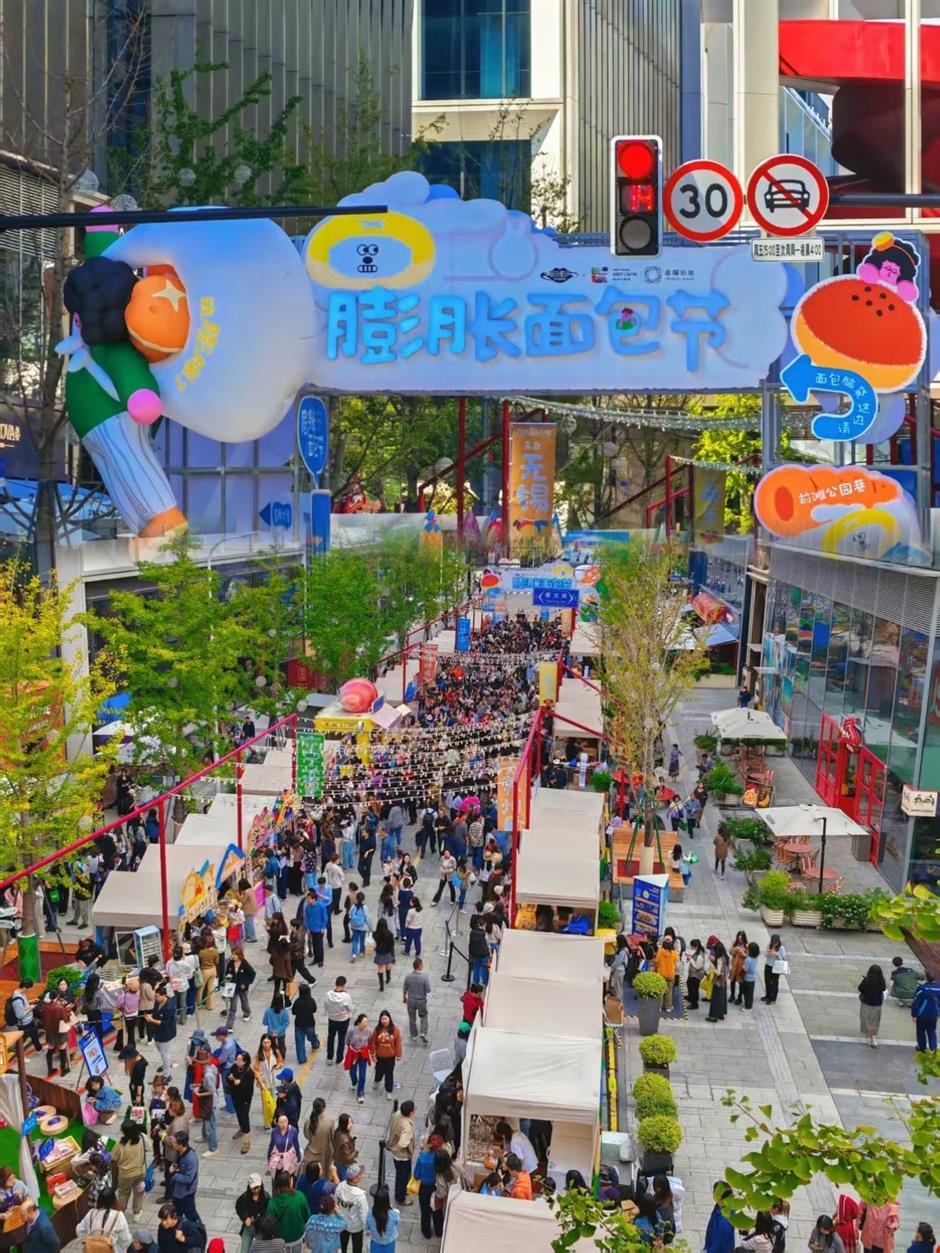
Puff Up Bread
The mall, as a concept, has been dying for at least fifteen years. You've read the obituaries. Foot traffic declining, anchor tenants leaving, the whole typology supposedly hollowed out by e-commerce and changing consumer behavior and the general indignity of spending a Saturday under fluorescent lights buying things you could have ordered to your door.
Shanghai's commercial districts have apparently not read the obituaries.
What markets represent, at their most functional level, is a refusal to wait. The old retail model was essentially passive: build the space, fill it with stores, and hope people show up. The new one is closer to programming, in the television sense. You give people a reason to come on a specific day for a specific thing that won't be there next week, and you make sure that reason is novel enough and exclusive enough and photographable enough that they tell everyone they know. The first-launch logic is, at its core, just urgency. Come now. It won't last.
Whether this is a sustainable transformation or an elaborate, city-subsidized sugar rush is a reasonable question that nobody in the middle of a 213% foot traffic increase is particularly motivated to ask. The numbers are good. The bread is selling. The burger influencer from the internet just broke an eight-year visitor record in a mall in Minhang.
Shanghai has always been good at being first. It turns out it's also good at making the first feel like something worth leaving the house for.
Source: City News Service
