


今日上海
男士时尚燃爆,韩系品牌魅力四射 - 2026年01月15日
Men's fashion on fire with sultry Korean brands
I'll be bold and say it outright: Shanghai's menswear scene is in the midst of a quiet renaissance. What was once a fairly neglected landscape dominated by safe Uniqlo khakis or oversized gorpcore monstrosities from overhyped local brands is now slowly transforming before our eyes. A new, aesthetic- and lifestyle-driven consumer is emerging. A consumer archetype that is navigating an exhausting sea of online-shopping slop and intimidating, logo-heavy boutiques. What I mean to say, there is a new wave in Shanghai's fashion scene that allows shoppers to feel included in the brands' ethos, finally, and most especially, including men.

Surprisingly, one of the first riders of this wave came with strong world building, polished aesthetic and from just about 900km north of Shanghai, the Korean fashion labels.
If you haven't been tuned into the city's fashion ecosystem, let me tell you some insider fashion tea. From my personal observations of the market and after talking with many of my local fashion bloggers, there has been a certain trend. A desire to make Shanghai into a harbor of all of East Asia's fashion best. The Korean wave ( 한류) has moved way beyond K-pop and skincare (something that has already had a large presence here), but now is also rippling into Shanghai's previously fairly calm fashion waters, particularly in menswear.
The first arrivals were predictable. Gentle Monster and Tamburins, arguably Seoul's most globally fluent exports, quickly captured local hearts. More recently, MUSINSA opened its Shanghai store on Anfu Road, formalizing Korean fashion's presence as both retail and lifestyle authority. Nearby, even Salomon, technically French, now operates a flagship stocked with collections designed by its Korean team, offering everyday pieces that feel more "city boyfriend" than trail runner.
More revealing, however, is how smaller designer brands are navigating Shanghai's notoriously complex fashion scene. One of the most telling case studies is 51Percent.
Hunk-led world-building
"Your fantasy is our priority" is 51Percent's motto, and it may as well double as a thesis for this new phase of Shanghai menswear. This past Christmas season, I got a rare look behind the curtain – not through a sterile website blurb or sponsored review, but directly from the brand's founder and its China-based marketer.
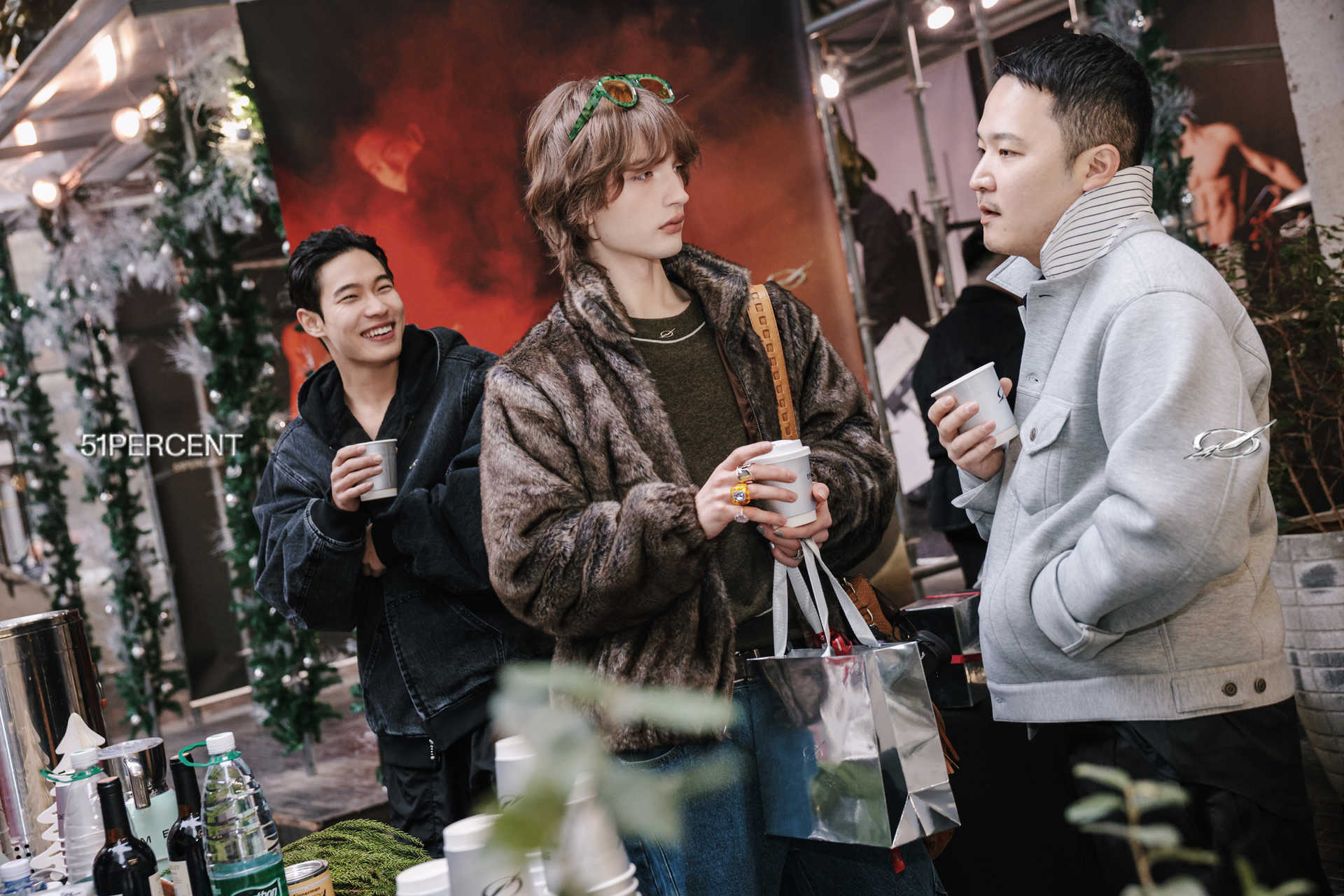
The setting: a cozy Christmas gathering at 51Percent's Jing'an flagship store. Outside, Shanghai was aggressively freezing. Inside, hot cocoa and mulled wine were flowing, while local hunks- freshly extracted from the brand's sensual, Greek-statue-coded campaign posters- casually modeled the clothes, chatted with guests, and sipped drinks like it was a friend's house party rather than a retail activation.
Where some brands fail…
As a fashion blogger, I've attended many fashion events, brands' grand openings, and such; however, I must say, most of them were stressful in the worst way. Over-advertised invitations. Overcrowded rooms. Dozens of photographers are circling like paparazzi at a red carpet. Organizers are too busy managing chaos to actually talk to anyone. Not to mention that the brains and soul behind the brands, aka the designer, is usually not present. The result is visibility without intimacy, content without connection.
This was the opposite. One photographer. No frantic schedules. Conversations that felt unforced. Most notably, the designer himself, Lee Won-Jae, was present- chatting with staff, guests, and curious passersby alike. The contrast between the brand's towering, erotic campaign imagery and the warmth of the real-life interaction was… disarming, in the best way.
Desire as design language
For brands like 51Percent, sensuality isn't just aesthetic – it's strategic. Their imagery bridges masculine eroticism with wearable, consumer-friendly design, attracting customers who don't just buy clothes, but buy into a mood. Tank tops and underwear are star products for a reason: they place the body, not the logo, at the center of desire.
This kind of approach requires founders with strong, instinct-driven vision rather than purely corporate branding instincts. Lee Won-Jae, a former mechanical engineer, fits that mold perfectly.
"The name 51Percent comes from my own life story," he explained. "After graduating and moving to Seoul, I wanted to make something beautiful. If I could make it just 1 percent more beautiful than what already existed, that felt meaningful. People should follow their instincts- disregarding gender or identity- and create and wear things that make them feel beautiful."
That instinctive, body-forward philosophy resonates strongly in Shanghai right now, especially among men who are increasingly comfortable engaging with fashion as pleasure, not performance.
According to Bryant, director of the Shanghai-based creative agency Bloop Bloop, foreign brands succeed here only when they engage socially, not just commercially. "People value relationship-building," he notes, pointing to the community-driven events prioritized by Korean brands like 51Percent, Musinsa, and Gentle Monster.
One near-universal tactic in this Korean playbook? Food. Gentle Monster and Tamburins have Nudake (their brand's café). Salomon installed its Salomon BA bakery right next door. And at 51 percent's Christmas gathering, the snack table was curated with almost as much care as the clothes. I mention this because most brands forgo any sort of communal elements that food brings.
This is straight out of Seoul's fashion districts, where cafés aren't side quests- they're part of the main storyline. In Shanghai, it works perfectly. It feeds the city's relentless café culture, guarantees Instagram content, and ensures that even if you leave without shopping, your followers still get a close-up of a very aesthetic cup of ice-cold coffee.
What this means for Shanghai menswear
This isn't about Korean brands "saving" Shanghai fashion. It's about showing what happens when fashion prioritizes fantasy, bodies, and community over pure consumption. Unlike American brands, which have a tendency to sexualize their (and models), 51 Percent's aesthetic edges close to sex appeal, but really... they just do a sophisticated job of celebrating the male form, showcasing how men can be more than just handsome.
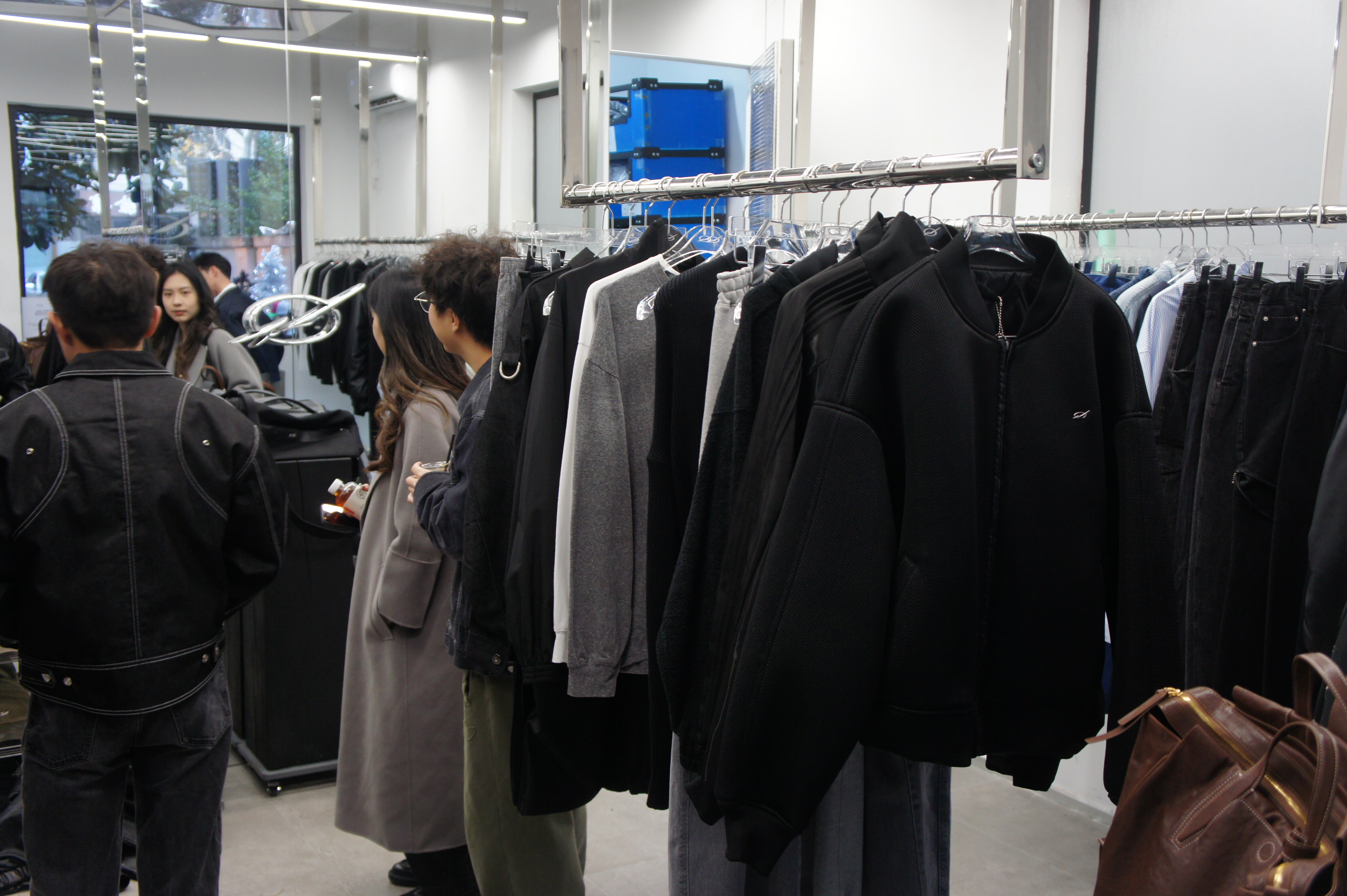
Positioned in the 300-1,800 yuan (US43.01-258.07) range, the brand comfortably occupies the upper-midrange market in the accessible-premium zone, above fast fashion and below luxury. Its design language speaks to audiences rarely centered in local menswear marketing, while newer offerings expand into outerwear and, soon, shoes (yes, insider tea).
What struck me about their last winter event is the memory of cinnamon in the air, Jay and Kevin (the models) shivering from cold with just their branded jackets on, and strangers bonding over mulled wine, which makes for a great story. But the real takeaway is sharper: in today's Shanghai, fashion success isn't just sold on racks or pushed through algorithms. It's built through presence, tasteful desire, and shared moments.
As the city's menswear scene continues to evolve, the real question isn't whether this intimate, body-forward approach works- it clearly does. The question is whether brands can scale intimacy without losing it, and whether Shanghai is ready to embrace fashion that comes close to the edge of sensuality, and is not just worn, but felt.
Here are a few more photos from their winter event in Shanghai. As a fashion-design student at Donghua University (one of the stand-out design institutes in Asia), I'm really hoping that other brands take a cue and design more brand-community events like this:
Source: City News Service
