


经济新闻
一财论坛探讨科创成果从实验室走向市场之路 2026-07-29
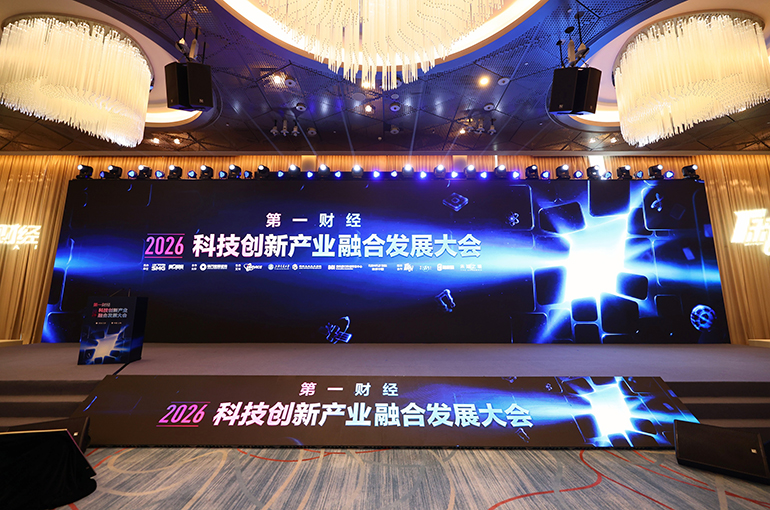
Participants in a business and policy forum on integrating technological innovation with industrial development organized by Yicai to mark seven years of Shanghai’s Nasdaq-like Star Market, discussed how hard technologies can move from laboratories to commercial application.
The Panoramic Report on the Seventh Anniversary of the Star Market was also published at the 2026 Conference on the Integrated Development of Technological Innovation and Industry, which was held in Shanghai on July 28 and brought together policymakers, industry experts, investors, and technology innovators.
More than 610 companies had listed on the Star Market, a technology-focused equities trading venue, as of June 30, together raising nearly CNY1 trillion (USD147.7 billion) through initial public offerings, according to the report. Those in new-generation information technology, high-end equipment manufacturing, and biomedicine account for over four-fifths of its listed firms.
Over the past seven years, Star Market-listed companies have distributed CNY217 billion (USD32.1 billion) in dividends, underscoring its growing role in supporting China's technology sector and returning value to investors.
Chinese President Xi Jinping opened the Star Market, officially known as the Science and Technology Innovation Board, on July 22, 2019, after proposing its creation nearly a year before. Launched with an initial batch of 25 stocks, the Star Market was set up to help homegrown hard-tech companies secure public funding by piloting a registration-based listing system that was subsequently extended to all Chinese mainland stock markets at the start of 2023.
More than 320 technology businesses are established in Shanghai on average each day, said Zhai Jinguo, deputy head of Shanghai’s science and technology commission. Ninety-five Shanghai-based companies have listed on the Star Market so far, with both their IPO fundraising and market capitalization ranking first nationwide. More than 10 hard-tech firms from the city also went public in Hong Kong in the first half of this year.
At the forum, Yicai Editor-in-Chief Yang Yudong outlined the latest developments of the media group's First Science & Tech Innovation platform, saying the initiative was launched in 2025 after frontline research revealed that links among industry, academia, and research institutions were fragmented, making it costly for companies to access technology, capital, policies, and markets.
Yang said conventional media coverage and one-off events had failed to address the practical challenges faced by tech firms. "The ecosystem of science and technology innovation is not born and built from top to bottom, but is co-created by partners from bottom to top, following the needs of enterprises," he noted.Bridging Labs and Industry, Markets
Liu Jian, chairman of Shenwan Hongyuan Securities, said large brokerages should serve not only as project underwriters and deal facilitators but also as connectors linking technology, industry, capital, and markets.
To support that goal, Shenwan Hongyuan has adopted an "investment banking + investment + investment research" strategy. The Shanghai-headquartered firm has set up an industrial research institute covering areas such as artificial intelligence, integrated circuits, commercial aerospace, and the low-altitude economy. It has also invested in local early-stage tech companies including Infinigence and Westwell Information Technology and sponsored the Star Market convertible bond refinancing of semiconductor materials maker Anji Microelectronics Technology.
Ni Jun, dean of the Global Institute of Future Technology at Shanghai Jiao Tong University and chief manufacturing officer of Contemporary Amperex Technology, outlined the institute's industry-education collaboration with CATL. Founded in August 2021, GIFT was among the first 12 future tech institutes approved by China's education ministry.
Researchers from the institute and battery and energy storage giant CATL have jointly set a world record for perovskite photovoltaic modules measuring one meter by two meters, with the results published in the journal Nature.
In his keynote speech, Zhang Xiaojing, director of the National Institution for Finance and Development, said the primary battleground for technology finance lies not in the banking system but in the capital market and the venture capital ecosystem.
China must complement entrepreneurs' innovative spirit with an "institutionalized innovation risk-taking capability" to compete in global technology, Zhang pointed out. That means establishing systematic mechanisms for identifying, pricing, and managing risk, giving them the same institutional support as research and development.
来源:Yicai Global
