


经济新闻
芯片公司在2026年SEMICON China上发出“本地化供应链”信号 2026-03-29
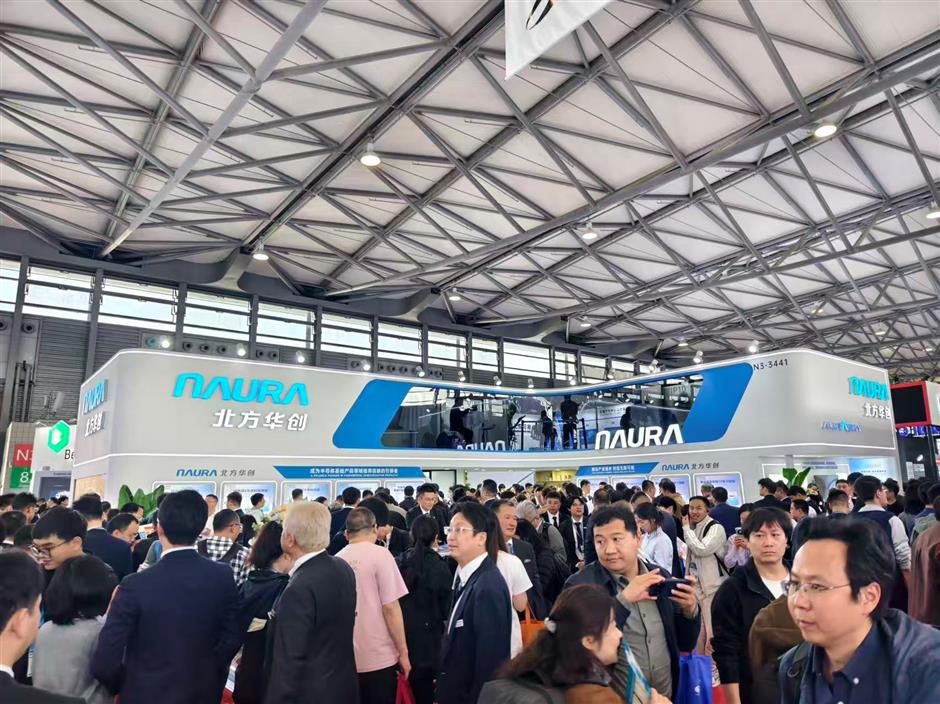
People flocked to SEMICON China in Shanghai.
Shanghai hosted the nation's largest semiconductor trade show, SEMICON China 2026, from last Wednesday to Friday. Covering over 100,000 square meters, the event showcased China's "de-risking" strategy as domestic equipment manufacturers transition from prototype to high-volume industrialization.
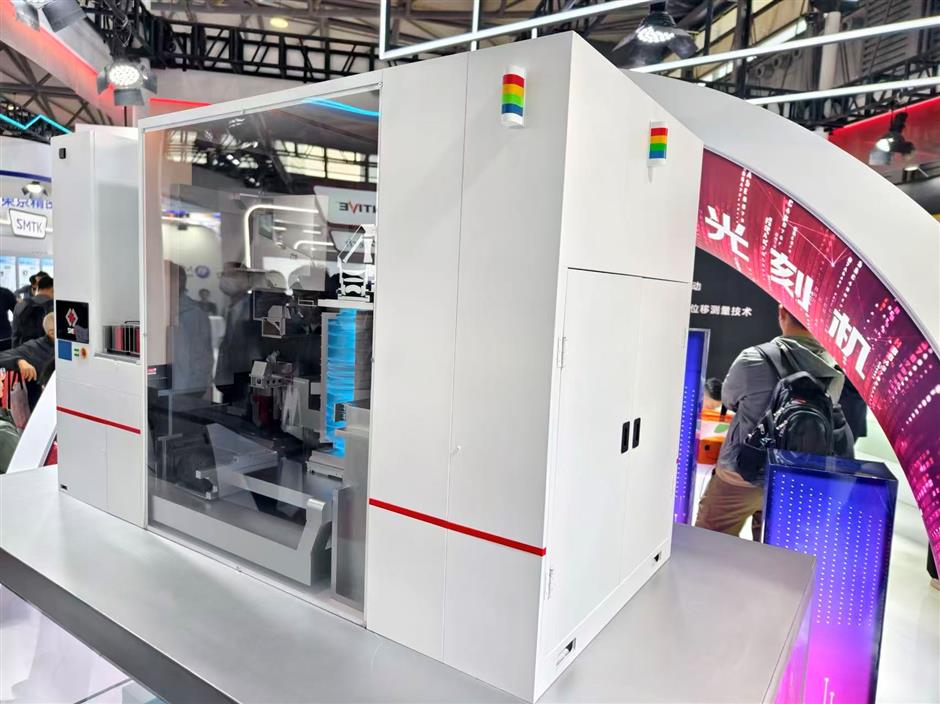
Shanghai Micro Electronics Equipment showcased its 100-percent in-house-developed lithography technology.
SMEE Breaks Silence on Lithography Progress
Shanghai Micro Electronics Equipment (SMEE) showcased its 100 percent in-house lithography technology at the event. On-site staff confirmed that these systems, once experimental, have entered mass production with "double-digit" annual sales growth, strengthening their position as a domestic alternative to Dutch giant ASML.
ASML is a key Dutch supplier of advanced semiconductor lithography machines, especially Extreme Ultraviolet (EUV) systems for chip manufacturing. ASML cannot sell top-tier EUV machines to China due to US-led restrictions, limiting them to DUV technology. China is reportedly testing EUV prototypes and investing heavily in domestic alternatives.
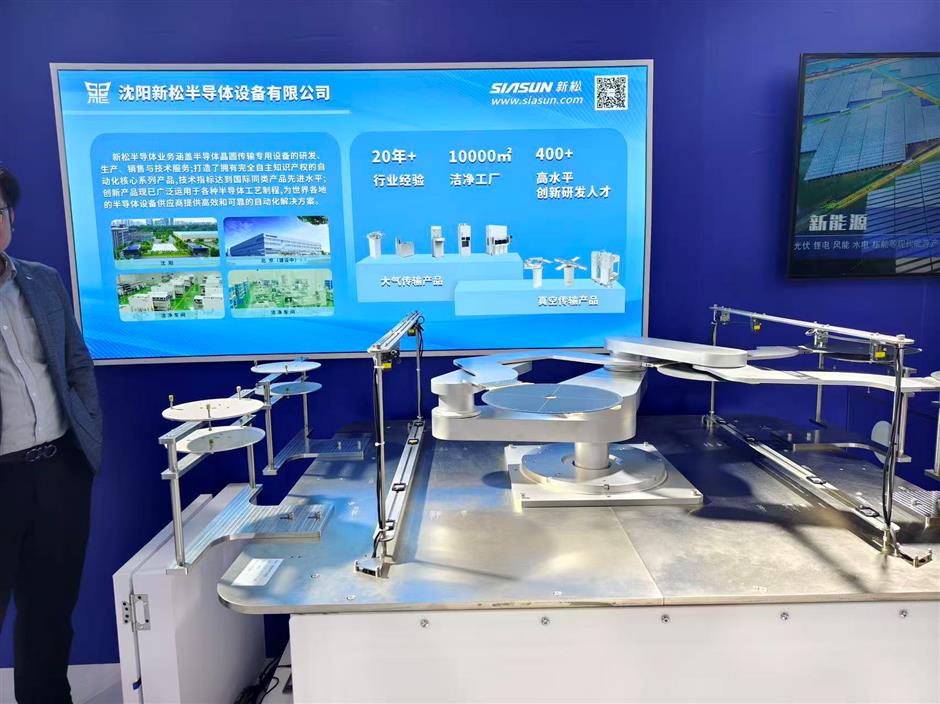
Specialized robotics designed for ultra-cleanroom environments for chip-making
A Unified Front on the STAR Market
Leading Chinese chip equipment manufacturers reflected a unified front, proving that the gap in high-end manufacturing is closing. Important companies in this field are ACM Research, which provides advanced cleaning and plating solutions, AMEC, known for its plasma etching technology, and Piotech, which focuses on thin-film deposition equipment that is essential for making advanced logic chips. Another spotlight was a robot from Shenyang-based Siasun, with specialized robotics designed for ultra-cleanroom environments for chip-making.
Many of them are now listed and turning into poster-boy players in the STAR Market. For example, the STAR-listed Piotech share price more than doubled in 2025 to close at 330 yuan at the end of the year.
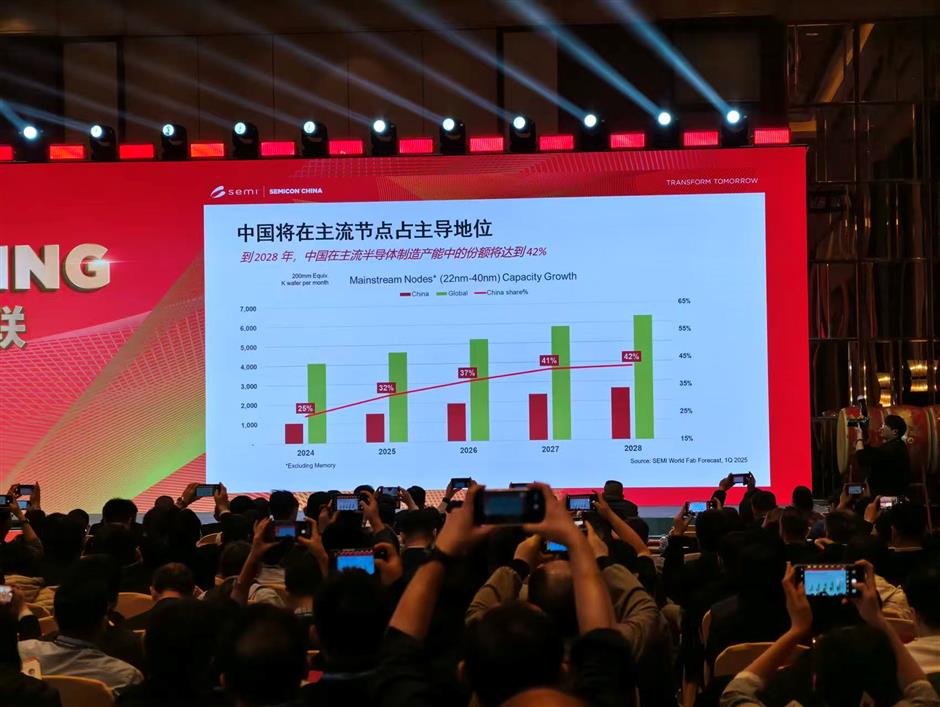
China is increasing its share of semiconductor production capacity
Booming Demand for AI Tailwinds
SEMI China President Lily Feng noted that the global semiconductor market is now on track to hit the US$1 trillion milestone by 2026 – four years ahead of previous forecasts.
"The AI boom is supercharging capacity expansion," Feng said, projecting that China's share of global chip capacity will reach 32 percent by 2030 from 20 percent in 2020.
The event coincides with a period of robust financial growth for Chinese mainland foundry leader SMIC. According to its 2025 fiscal report, STAR-listed SMIC's net profit surged 39 percent year-over-year to US$685 million, driven by a 16.2 percent jump in revenue.
While domestic firms push for self-reliance, global players like Tokyo Electron (TEL) and Canon maintain a visible presence in the event. The geopolitical landscape has forced a strategic shift: they want to be part of the supply chain.
A representative from a German tech firm, who declined to be identified, said his company is now developing a localized, "only-for-China" system to protect their interests in the world's largest chip market.
Source: City News Service
