


经济新闻
中国欢迎韩国代表团来华研究自动驾驶技术和人工智能 2026-03-24
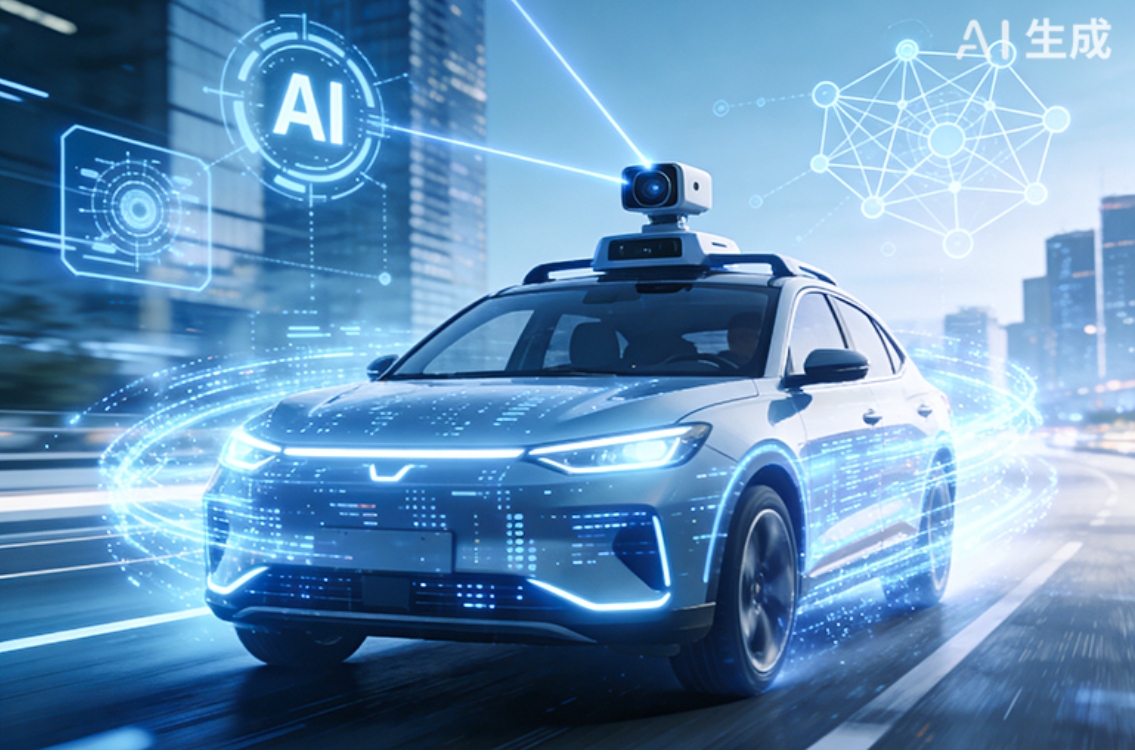
The government of South Korea has dispatched separate delegations to Beijing and Shanghai to learn about the latest developments in autonomous driving technology and artificial intelligence in China, while also exploring potential cooperation opportunities.
Nam Young-woo, director general of planning and coordination at South Korea's Ministry of Land, Infrastructure and Transport, led an interministerial policy research delegation in Beijing from March 18 to 20, according to the country's Ministry of Trade, Industry and Energy.
The over 20 delegates from the MOTIE, the Ministry of Economy and Finance, and the Financial Services Commission, studied China's policies on physical AI development in autonomous driving, examined related support programs and regulatory frameworks, test-rode Chinese self-driving vehicles, and held in-depth discussions with Chinese companies on the latest advances in road deployment and safety technology.
This was the first time South Korea had sent a policy research delegation to another country specifically to study self-driving tech, Kim Youngjun, a South Korean scholar, told Yicai. The country is racing to build out its position in autonomous driving and does not want to fall behind China and the United States, he said.
While South Korean companies have deep expertise in car manufacturing and vehicle electronics, they lack the vast real-world road testing data and the policy environment and urban operational experience needed to support large training data, Kim noted. South Korea's autonomous driving tests are concentrated in 47 designated pilot zones with limited route coverage, "which is why we want to learn from more mature markets," he said.
At the same time, South Korea's National Assembly's Trade, Industry, Energy, SMEs and Startups Committee traveled to Shanghai to conduct on-site research into China's research and development systems and innovation ecosystems across semiconductors, robotics, and AI.
South Korea established the K-Humanoid Alliance last year to bring together more than 40 industry, academic, and research institutions. The government led by President Lee Jae-myung plans to invest KRW45.9 billion (USD30.6 million) to support the development of international standards in AI, robotics, next-generation autos, and other advanced industries this year.
China led the world with 2,087 product categories in which it held the top global export market share in 2024, compared with just 81 for South Korea, according to a recent report by the Korea International Trade Association's Institute for International Trade.
In addition, China holds the edge over South Korea in mass production and market development in industrial robots, the Korea Institute for Industrial Economics and Trade reported last month. Its self-driving tech is also relatively more advanced in electric vehicles, and while South Korea retains its absolute advantage in memory semiconductors, China has gained ground in non-memory areas such as AI chip design.
The China-South Korea industrial relationship can no longer be characterized as simple substitution or vertical division of labor, with the latter at the high end and the former handling the mid-to-low end, Kim stressed, noting that instead, it has become an interlocking dynamic of overlapping competition and deep mutual dependence.
South Korean industries are simultaneously reinforcing their technological barriers in areas of competitive strength and increasing R&D investment in high-value-added products, while actively seeking entry points for cooperation with Chinese companies, hoping to leverage China's vast market and integrated supply chains to achieve shared development, he pointed out.
Source: Yicai Global
